DIGITAL SPECIMENS
CANDIDACY DEFENSE, Carroll gallery, Tulane university
2024
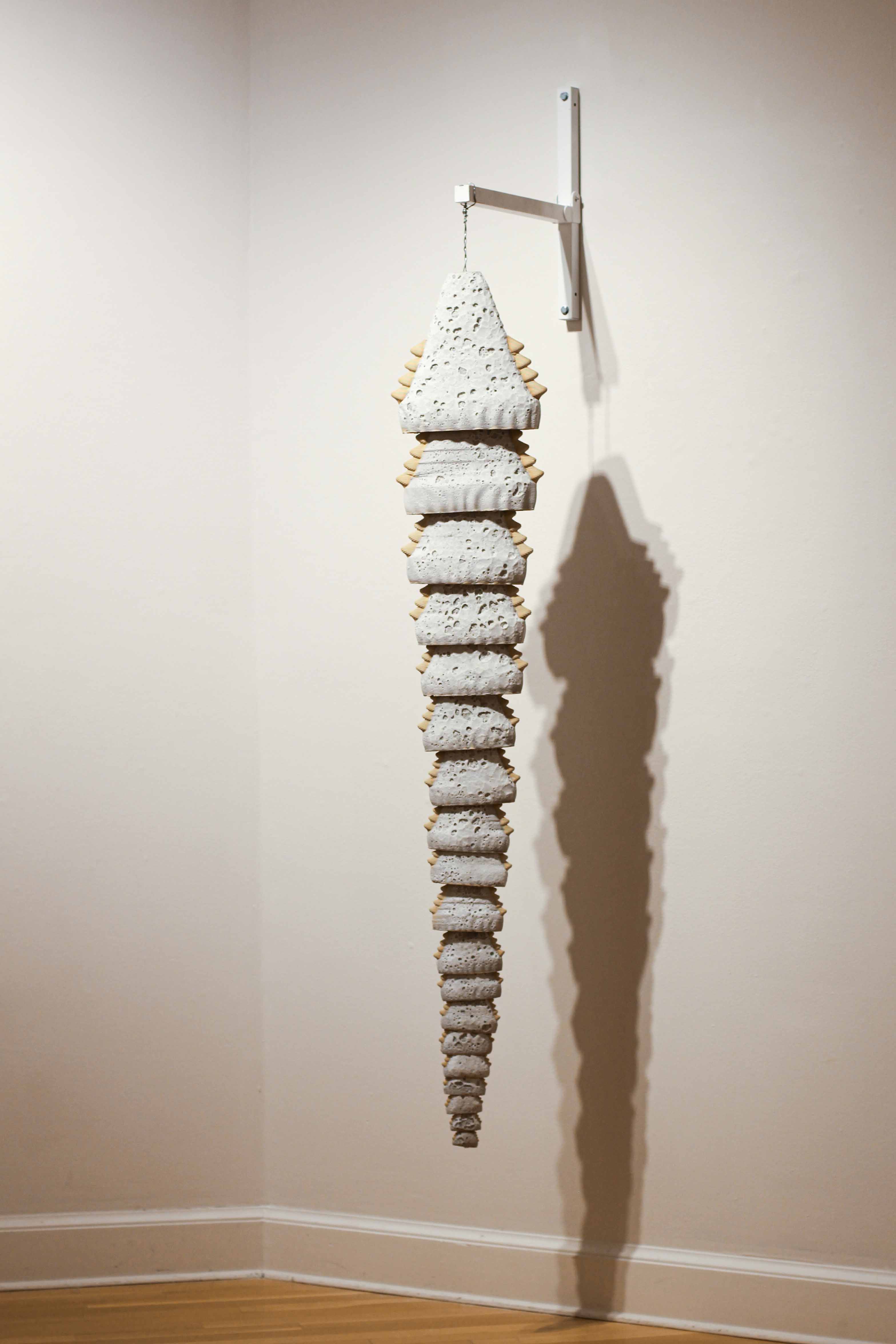
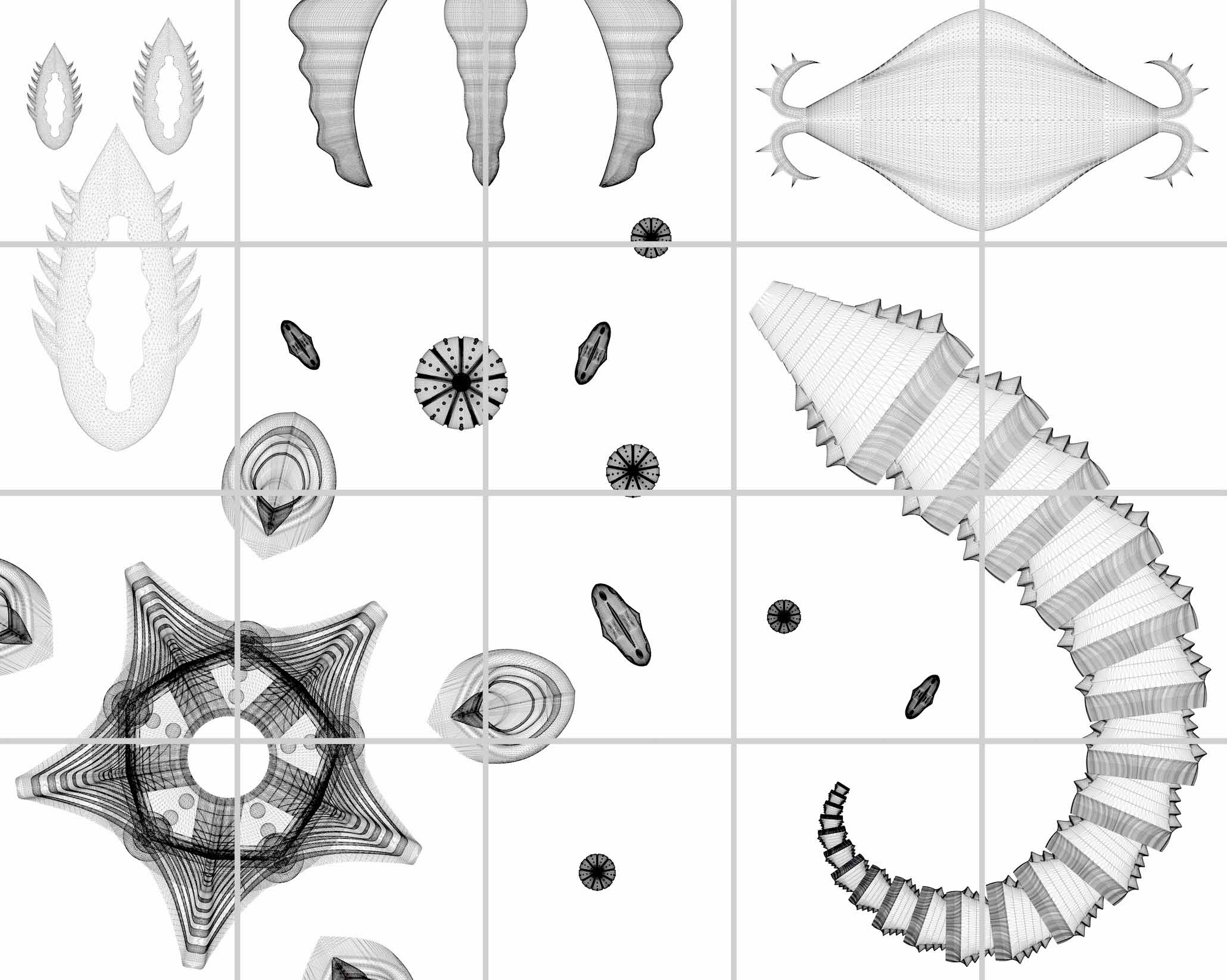
Digital Specimens explores morphology and ecological symbiosis as a way of visualizing the interconnectivity between all life on Earth. The work calls upon the evolutionary split of species and the visual similarities they still hold to one another. The coral mushroom resembles a branching sea coral; a sea urchin mimics an Astrophytum asterias cactus. These resemblances reveal patterns in evolutionary development, and a rich philosophy of interconnectivity between all life forms. Using 3D modeling software, I synthesize the homologous structures common between both the living and nonliving, and observe the geometries they hold. In my process of modeling the forms, I dream of what could be, or what could have been. These works are encapsulated by materials and environments that mimic natural processes. They may take the form of a life form, or landscape. When printed with hand harvested clay, the works can be immersed into their environment and become symbiotic with their surroundings. The surface of these sculptural works may become a microbiome or shelter for microorganisms, plant matter, and invertebrates. In a controlled environment like an aquarium, growth patterns of plants can be altered by adjusting the direction of the light source; this causes algae to grow in the contours of the works. As these non-human intelligences navigate the contrived terrain, they may find solace in a point of light encircled by land forms. Investigating the intricacies in the development and growth of all matter reveals a small facet of the fabric of our reality, and existential thought.
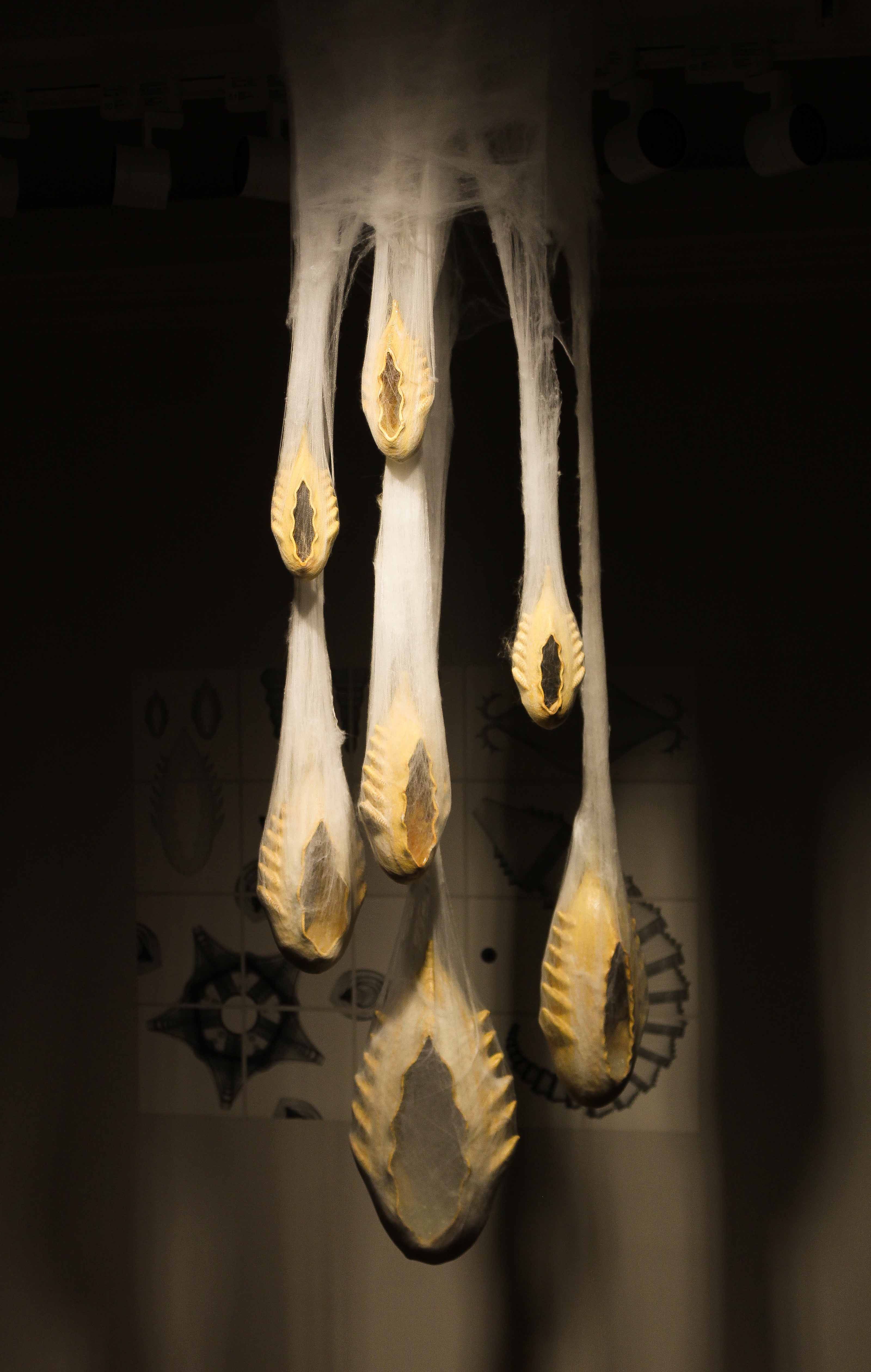
Pendulum Nesting, 3D printed Ceramic, webbing, resin, 7' H x 3' W x 3', 2024
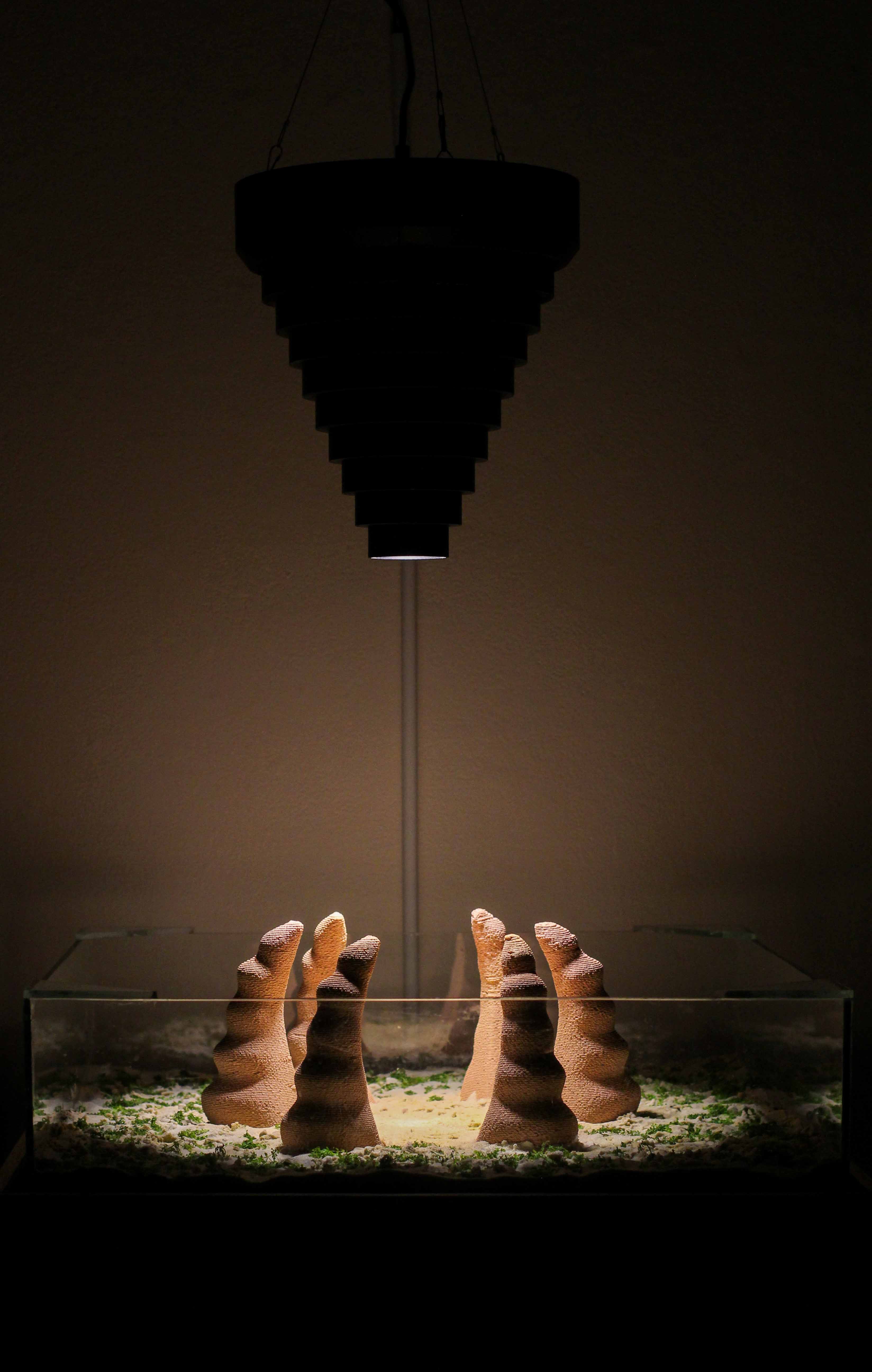
SOL, 3D printed hand harvested clay, 3D printed PLA, LEDs, plant matter, substrate, glass, 5' H x 25" W x 25" L, 2024