Digital Specimens of the Chocó
Ecuador, South America
2024 - current
INTERACT WITH THE MODELS
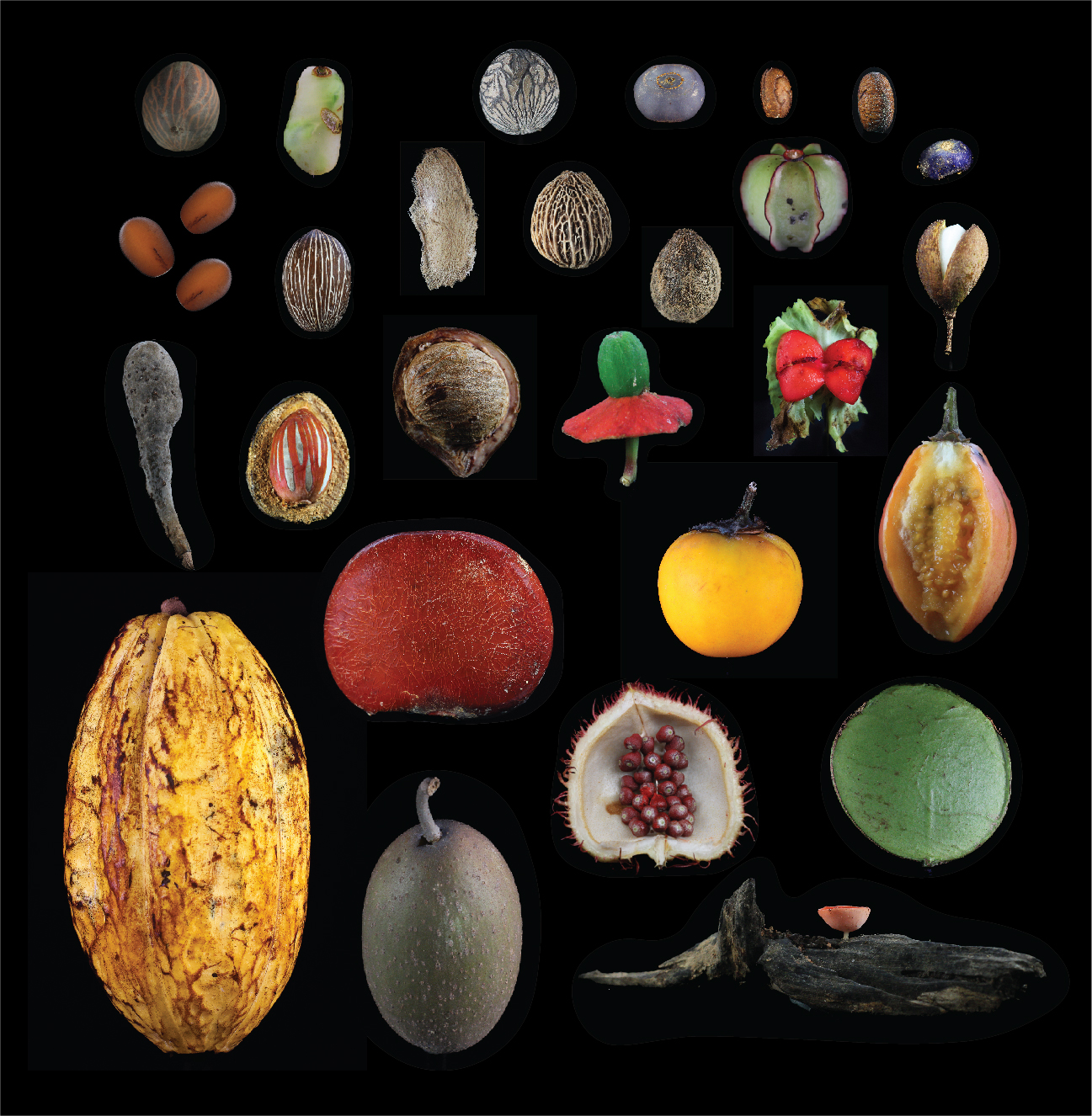
Digital Specimens of the Chocó is intended to serve the public as a nonlinear, interdisciplinary art and science endeavor, taking place across cultures and spaces - both digital and physical. Through the collection of 2D and 3D imaging, digitally based artists and scientists are encouraged to find common ground in the unique biodiversity of the Chocò rainforest of northwestern Ecuador by means of environmental research and artistic environmental stewardship. Situated along the boundary of the Mache-Chindul Reserve is an award-winning integrated social and biodiversity hub: FCAT (Foundation for the Conservation of the Tropical Andes). This community-led NGO offers programs to the local community and international collaborators, which range from an environmental youth club and a women’s art cooperative.
In the summer of 2024, multimedia artist Grace McIntyre-Willis was prompted by researchers at FCAT with an issue: botanists were unable to preserve plant specimens for long periods of time without degradation. Grace’s interests in the evolution of biological form and digital fabrication in their own artistic practice led them to propose a solution that could enrich both disciplines: 3D macro photogrammetry. Photogrammetry is the act of compositing multiple overlapping photos of one subject into a 3D model, using specialized equipment such as polarized lighting, a macro camera lens, and motorized turntables. Through the process of close-range macrophotogrammetry, specimens that cannot be preserved through traditional methods can be digitally catalogued in their three-dimensional form and returned to their environment. During their first trip to FCAT, Grace was able to collect the data of 30 species, which are now being processed to be hosted on open-source web-based repositories.